Hempstead gets a particular kind of roof abuse. Nor'easters roll through from late fall into spring with sustained wind that can tear up a poorly nailed shingle run. Summers get humid enough to cook a low-slope roof membrane if it's not ventilated right. And January thaws followed by a hard freeze set up ice dams on roofs that don't have enough insulation in the attic floor. A roofer who's only ever worked somewhere dry and flat is going to miss things that matter here. So the first filter isn't price. It's whether the person on your roof actually understands what Long Island weather does to a roof over twenty years, not just what it looks like on install day.
Check the license and the insurance, not just the truck
In New York, home improvement contractors working in Nassau County need to be licensed through the county, and you can look that license number up yourself before you sign anything. Ask for it. A contractor who hesitates or says "we're licensed, don't worry about it" is telling you something. Same with insurance. You want to see a current certificate of liability insurance and workers' comp, not just hear that they have it. If a guy falls off your roof and the company has no workers' comp, that claim can come back on your homeowner's policy. It's a two-minute ask that protects you for years.
What a real inspection looks like
A contractor who's going to give you an honest number gets up on the roof, not just on a ladder looking at it from the gutter line. They should be checking the decking for soft spots, which usually means water's already gotten into the plywood or OSB underneath the shingles. They should look at flashing around every chimney, skylight, and vent pipe, since that's where most leaks actually start, not in the open field of shingles. If your house was built before the 1990s, there's a decent chance the flashing is old aluminum or even lead that's cracked at the seams. They should check attic ventilation too. A roof with no ridge vent or blocked soffit vents traps heat and moisture, which shortens shingle life and feeds ice dams in winter. A contractor who quotes you a full price over the phone, sight unseen, isn't inspecting anything. They're guessing.
Ask what they'll actually tell you in writing
A proper estimate names the shingle brand and line, not just "architectural shingles." It names the underlayment, whether that's standard felt or a synthetic like Tyvek Protec. It spells out whether they're installing ice and water shield along the eaves, which matters a lot here given how often Hempstead sees that freeze-thaw cycle through January and February. Building code generally wants that membrane extending at least 24 inches past the interior wall line, sometimes more depending on roof pitch. If the estimate just says "tear off and replace" with a flat number, you don't actually know what you're buying.
Red flags worth walking away from
- Someone who knocks on your door after a storm and says they're "already working in the neighborhood" and can give you a deal if you sign today. Real storm damage repair starts with an inspection and photos, not a pressure pitch on your porch.
- A contractor who wants full payment up front before any material shows up. A deposit is normal. The full balance before work starts is not.
- No written contract, or a contract that doesn't list the square footage, the materials, and a rough timeline.
- Anyone who tells you they can skip the permit to save time. More on that below, but skipping it isn't a shortcut, it's a liability you inherit.
- A price that's dramatically lower than every other quote you got. Roofing material and labor costs don't vary that much contractor to contractor. A number way under the others usually means cut corners, a lowball deposit scheme, or a crew that isn't actually insured.
How permits actually work here
Most roofing work in Hempstead, whether it's a full tear-off or a structural repair, needs a permit through the Town of Hempstead's building department, or through the village building department if your property sits inside one of the incorporated villages, which a lot of this area does. Simple reroofing over existing layers sometimes gets handled differently than a full tear-off to the deck, so it's worth asking your contractor which category your job falls into and who's pulling the permit. A legitimate contractor pulls it themselves and handles the inspection, usually a rough inspection before the final layer goes on and a final once it's done. If your house is older, built back in the Levittown-era boom of the late 1940s through the 1960s, there's a good chance it's already had at least one reroof, maybe two, and code now generally limits you to two layers of shingles before a full tear-off is required. That's worth knowing before you get a quote that assumes a simple overlay.
What your house's age tells a contractor
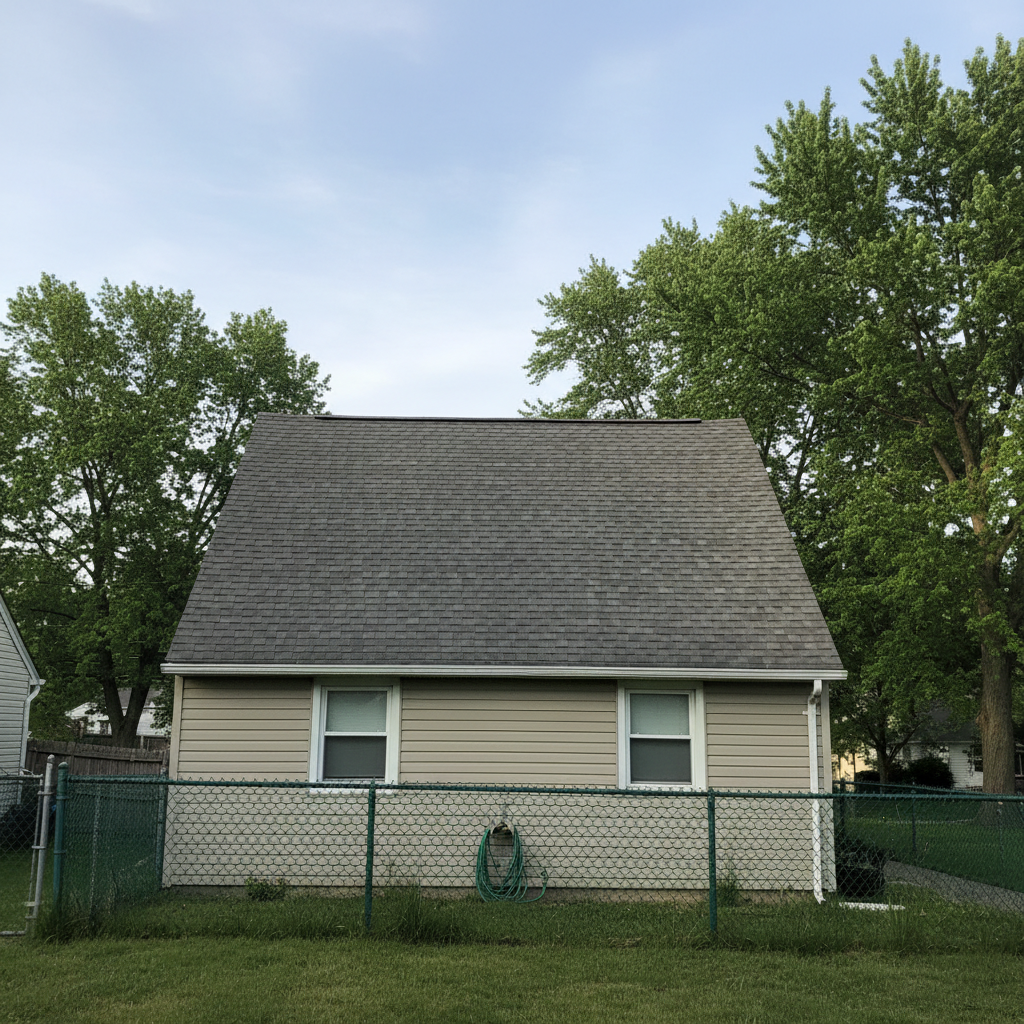
A lot of Hempstead and the surrounding towns, Garden City, Uniondale, West Hempstead, built up fast after the war, so a huge share of the housing stock is Cape Cods and small colonials from that same twenty-year window. That means the roof decking underneath is often old, sometimes skip-sheathing instead of solid plywood, which changes how a new roof system gets installed and whether extra decking work is needed first. Newer construction from the last couple of decades is more likely to have OSB decking and better attic ventilation baked in from the start. If you're not sure which you have, that's exactly what a pre-purchase or pre-sale roof inspection is for, and it's a lot cheaper to find out now than mid-tear-off.
Get it in writing, get more than one quote
Three quotes is reasonable. More than that and you're mostly wasting people's time for marginal gains. Compare them on what's actually written down, materials, warranty terms, who pulls the permit, and the timeline, not just the bottom line number. A manufacturer's shingle warranty is often 25 to 30 years on materials, but that's different from the contractor's workmanship warranty, which is usually much shorter and should be spelled out separately. Ask what happens if a leak shows up eight months after the job. If the answer is vague, that's your answer.
If you want someone to walk your roof and tell you straight what shape it's in before you spend anything, that's the kind of inspection Roofcrest Roofing Group does around Hempstead and the surrounding towns. No pressure to sign anything on the spot.